



 English
 中文简体
 русский
 Español
 Deutsch

Stainless Steel Valve Castings Y-Strainer Body is a precision-cast component designed to effectively...
READ MORESilica Sol Investment Cast Hollow Mounting Plate for Lightweight Industrial Assembly
Content
- 1 Introduction
- 2 Product Overview
- 3 Why a Hollow Mounting Plate Is an Effective Engineering Solution
- 4 Advantages of Silica Sol Investment Casting
- 5 Material Advantages of Stainless Steel
- 6 Manufacturing Process
- 7 Competitive Advantages Compared with Conventional Alternatives
- 8 Application in Electronic Control Systems
- 9 Application in Aerospace Ground Support Equipment
- 10 Application in Textile Machinery
- 11 Quality Control and Production Reliability
- 12 Customization and Engineering Support
- 13 Installation and Service Considerations
- 14 Supplier Manufacturing Strengths
- 15 Cost and Lifecycle Value
- 16 Design Recommendations for Customers
- 17 Frequently Asked Questions
- 17.1 What is the Stainless Steel Industrial Hardware Castings Hollow Mounting Plate used for?
- 17.2 Why does the plate have a hollow center?
- 17.3 What manufacturing process is used?
- 17.4 Can the mounting hole pattern be customized?
- 17.5 Can other stainless steel grades be supplied?
- 17.6 Is the entire casting fully machined?
- 17.7 How does this product compare with a welded mounting plate?
- 17.8 Is the product suitable for high-vibration machinery?
- 17.9 What information should be provided for a quotation?
- 17.10 Can the product be supplied for low-volume customized projects?
- 17.11 What quality controls are available?
- 18 Conclusion
- 19 References
- 20 Product: Stainless Steel Industrial Hardware Castings Hollow Mounting Plate
Introduction
Industrial equipment designers increasingly need components that combine strength, dimensional accuracy, corrosion resistance, reduced weight, and efficient installation. A mounting plate may appear to be a simple structural part, but its performance can influence the alignment, stability, vibration behavior, maintenance convenience, and service life of an entire machine or assembly. When the plate includes a hollow geometric center, accurately positioned mounting holes, thin or irregular sections, and demanding surface requirements, conventional fabrication methods may create unnecessary limitations.
The Stainless Steel Industrial Hardware Castings Hollow Mounting Plate is developed for this type of demanding application. Produced through silica sol investment casting, the component combines the design flexibility of precision casting with the strength and durability of stainless steel. Its hollow center reduces unnecessary mass while preserving a rigid load-bearing perimeter. At the same time, the investment casting process allows the mounting plate to be formed as a near-net-shape component with complex geometry, accurately located holes, smooth surfaces, and reduced dependence on extensive machining.
This product is suitable for industrial control equipment, aerospace ground support systems, textile machinery, and other assemblies that require dependable structural support in a compact and weight-conscious format. It is especially valuable where a fabricated plate would require multiple parts, welded joints, extensive machining, or additional finishing operations.
Manufactured by Xinghua Shuangjie Casting Co., Ltd., the hollow mounting plate benefits from more than two decades of experience in silica sol medium-temperature wax investment casting. The company specializes in stainless steel, alloy steel, carbon steel, and special steel castings for industrial customers. Its manufacturing approach emphasizes controlled raw materials, customized material formulations, process stability, dimensional precision, and continuous quality improvement.
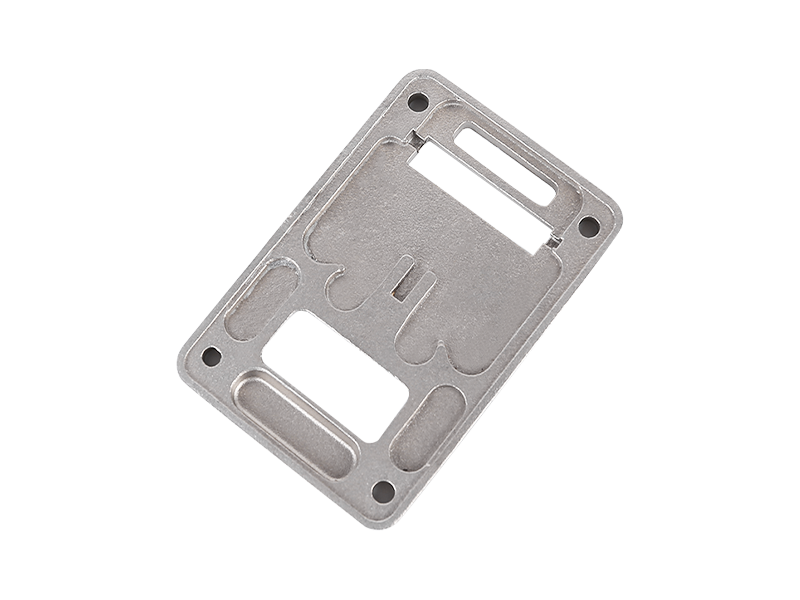
Stainless Steel Industrial Hardware Castings Hollow Mounting Plate
Product Overview
The Stainless Steel Industrial Hardware Castings Hollow Mounting Plate is a precision-cast support component designed to provide secure attachment and stable load transfer while minimizing unnecessary weight. The primary structure consists of a robust outer frame and a hollowed-out geometric center. This configuration allows the plate to retain a substantial amount of material where it is needed for load-bearing and fastening, while removing material from lower-stress areas.
The surrounding mounting holes are positioned to support fast and accurate installation. Correct hole location is essential in industrial assemblies because even small deviations can create alignment problems, uneven loading, installation delays, or the need for on-site modification. By incorporating the hole pattern into the casting design and applying controlled finishing operations where necessary, the product can support repeatable assembly across equipment platforms.
The component is made from stainless steel, providing a combination of mechanical strength, corrosion resistance, durability, and a clean industrial appearance. Stainless steel is suitable for environments where moisture, cleaning agents, temperature changes, dust, vibration, or incidental chemical exposure may affect ordinary carbon steel. The exact stainless steel grade can be selected according to the customer’s mechanical, corrosion, temperature, and process requirements.
The product is classified as a stainless steel industrial hardware casting, but its design value extends beyond basic hardware. It can serve as a structural interface between a machine frame and an attached mechanism, a backplate for an electronic control assembly, a support base for ground equipment, or a positioning component in high-speed machinery.
Main Product Characteristics
The hollow mounting plate incorporates several functional characteristics that distinguish it from a standard flat plate or a basic fabricated bracket:
1. Hollow structural center: The central opening removes unnecessary material and helps reduce component weight while maintaining a rigid external support structure.
2. Stainless steel construction: The material provides durability, corrosion resistance, and reliable performance in demanding industrial environments.
3. Precision-located mounting holes: The hole pattern is designed for stable attachment, repeatable installation, and accurate positioning.
4. Investment-cast geometry: The silica sol process supports complex profiles, integrated features, rounded transitions, and detailed contours that may be difficult or expensive to produce through cutting and welding.
5. Reduced secondary processing: Near-net-shape production can lower the amount of machining, drilling, grinding, and assembly required after casting.
6. Industrial surface quality: The casting process and controlled finishing provide a smooth, professional appearance together with resistance to ordinary wear and handling damage.
7. Adaptability: The product can be customized for different stainless steel grades, dimensions, hole arrangements, load conditions, and equipment interfaces.
Why a Hollow Mounting Plate Is an Effective Engineering Solution
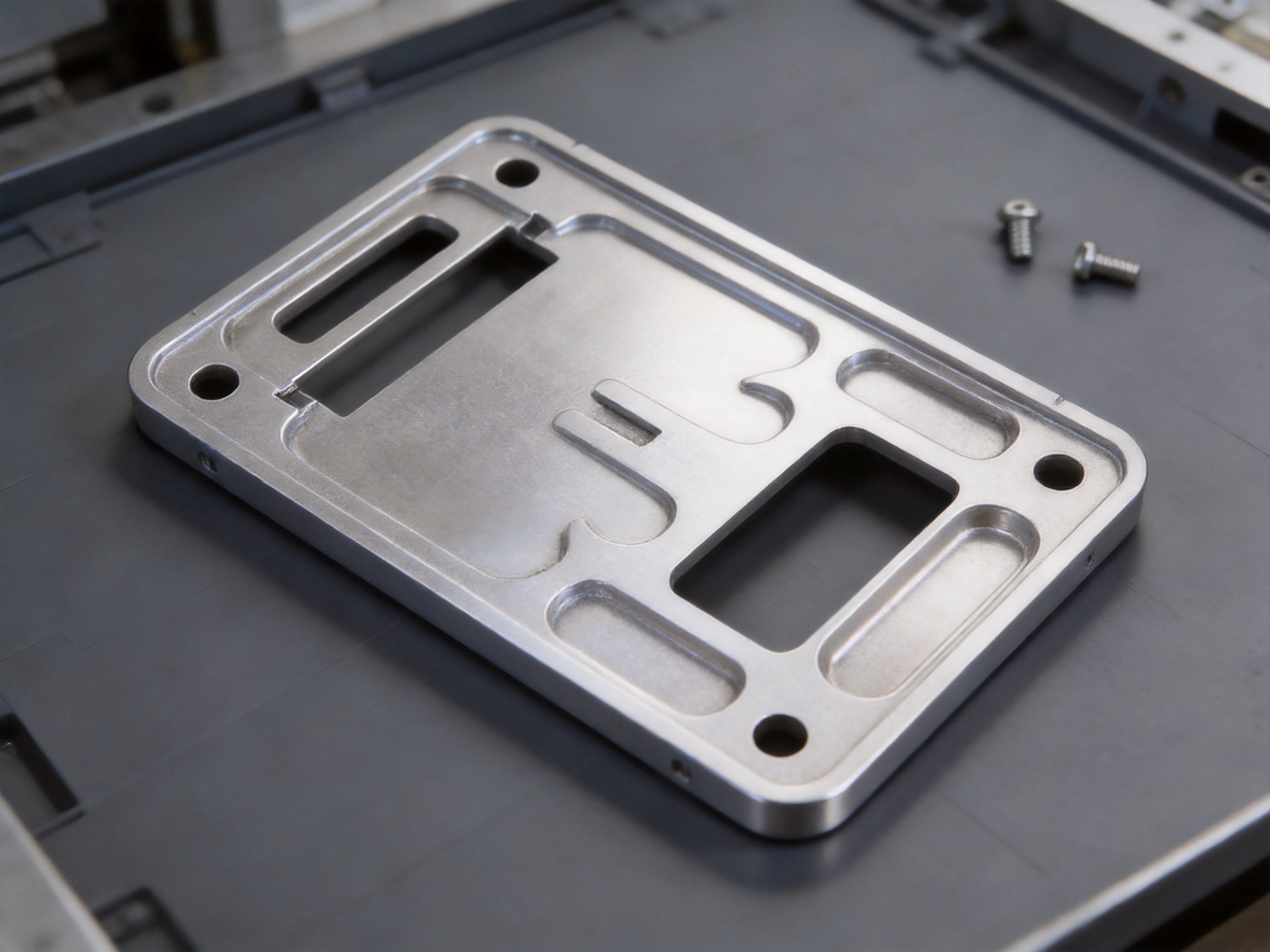
A solid mounting plate is easy to understand, but it may contain more material than necessary. Excess material increases weight, cost, handling effort, and sometimes thermal mass. In contrast, a hollow design can place material more strategically. The outer frame and fastening regions preserve stiffness and load-transfer capability, while the center is opened to remove low-value mass.
This approach is based on a practical engineering principle: structural material should be concentrated in areas that carry load, resist bending, support fasteners, or maintain alignment. The result is not simply a lighter plate. It is a component designed around functional load paths.
In electronic control systems, a lighter backplate can make cabinet installation easier and reduce the load placed on enclosure supports. The open central geometry may also provide additional clearance for cables, connectors, heat movement, or access to adjacent components. The plate can therefore perform both a support function and a space-management function.
For aerospace ground support equipment, weight reduction is especially important. Ground equipment is frequently moved, repositioned, transported, or assembled in changing locations. A rigid but lighter mounting component can make manual handling and equipment mobility more efficient without requiring a reduction in structural reliability.
In textile machinery, high-speed motion and continuous vibration can place demanding requirements on support parts. A mounting plate must maintain accurate positioning and resist deformation while the machine operates repeatedly. The hollow design can reduce unnecessary inertia, while the stainless steel structure and accurately produced mounting features support reliable positioning.
The hollow center can also help designers avoid unnecessary overlap with other parts. Instead of using a large solid plate and then cutting away material, investment casting can form the opening directly into the component. This can reduce material waste and simplify the final shape.
Advantages of Silica Sol Investment Casting
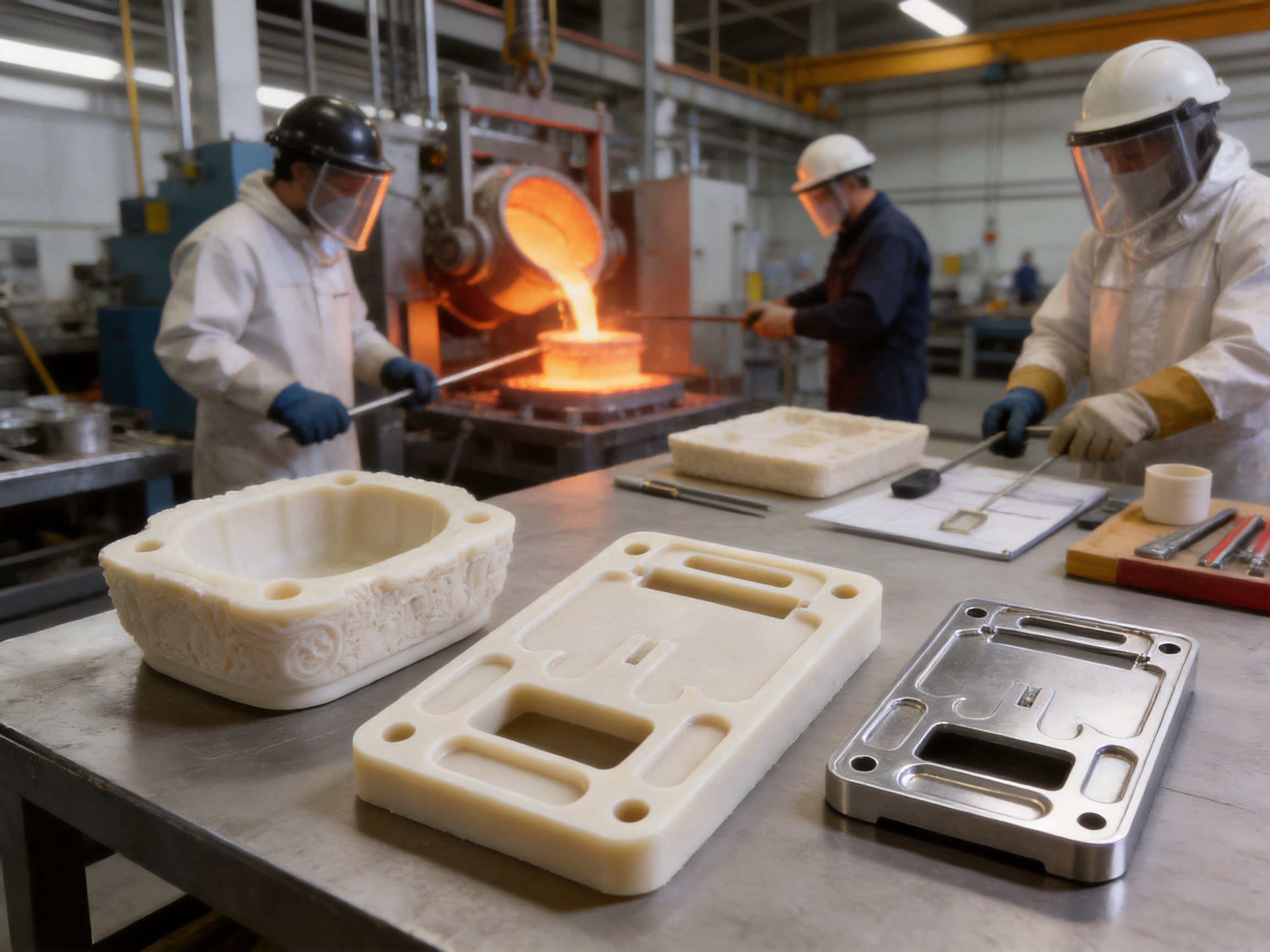
Silica sol investment casting is well suited to components that require a combination of intricate geometry, good surface quality, reliable dimensional control, and material flexibility. The process uses a wax pattern to reproduce the desired component shape. The pattern is coated with successive ceramic layers, and after the shell has reached the required strength, the wax is removed. Molten metal is then poured into the ceramic shell. Once solidified, the shell is removed and the casting is cleaned, inspected, and finished.
Compared with conventional sand casting, silica sol investment casting generally provides finer detail, smoother surfaces, and improved dimensional precision. This is particularly valuable for a mounting plate with a hollow center, perimeter holes, curved transitions, and carefully controlled interfaces.
Complex Geometry in a Single Component
Fabricated mounting plates may require several operations, including laser cutting, milling, drilling, bending, welding, grinding, and surface treatment. Each additional operation creates another opportunity for dimensional variation, distortion, residual stress, or assembly error. Investment casting can integrate many of these features into one near-net-shape part.
The hollow mounting plate can therefore be produced with its frame, openings, ribs, bosses, transitions, and other design features incorporated into the original pattern. This reduces the number of separate components and can improve the consistency of the final structure.
Improved Surface Quality
The ceramic shell used in silica sol investment casting can reproduce fine surface details and produce a relatively smooth casting surface. A smooth surface is valuable for industrial hardware because it reduces the need for heavy grinding and makes the component easier to clean, inspect, handle, and install.
Surface quality also contributes to the product’s professional appearance. Although appearance is not a substitute for engineering performance, a clean and uniform component can support equipment quality standards and improve the perceived reliability of the finished machine.
Reduced Machining Requirements
Near-net-shape casting does not eliminate all machining. Critical interfaces, mounting holes, reference surfaces, or dimensional features may still require finishing. However, it can reduce the amount of material that must be removed by machining. This can lower production time, tool consumption, material waste, and manufacturing cost, especially when the geometry would otherwise require extensive CNC work.
Reduced machining is particularly beneficial for stainless steel because stainless steel can be more demanding to machine than ordinary carbon steel. A casting that arrives close to the required shape can limit cutting operations and simplify the production sequence.
Design Freedom for Customized Products
Investment casting provides designers with greater flexibility than standard plate fabrication. The customer can request variations in outer dimensions, opening shape, hole quantity, hole spacing, rib arrangement, mounting bosses, edge profiles, or material grade. The design can be adjusted to match a specific equipment interface instead of forcing the equipment to accommodate a generic plate.
This flexibility is important for industrial hardware because many components are made for specialized machinery or low-to-medium production volumes. A customized casting can provide the required performance without the high tooling or assembly burden associated with multiple fabricated parts.
Material Advantages of Stainless Steel
Stainless steel is selected for this mounting plate because the material supports a broad range of industrial requirements. Its chromium-containing alloy system forms a passive surface film that helps protect the metal from corrosion in many ordinary service environments. Depending on the selected grade, stainless steel can also provide resistance to oxidation, moisture, cleaning solutions, and selected chemicals.
For industrial control systems, stainless steel helps protect the support structure against condensation, routine cleaning, and the general environmental conditions found inside or around industrial cabinets. For textile equipment, it can resist exposure to lubricants, fibers, dust, and repeated handling. For aerospace ground support equipment, it provides a durable structural material that can tolerate outdoor or semi-outdoor use when the grade is appropriately selected.
Stainless steel also offers a useful balance of strength and toughness. A mounting plate must not only support a static load; it may also experience vibration, impact during installation, localized fastener loads, and repeated thermal changes. The appropriate stainless steel grade can be specified according to the equipment’s service conditions.
Grade Selection and Custom Material Formulation
Different applications require different material characteristics. Some customers may prioritize corrosion resistance, while others may require higher strength, improved wear resistance, better performance at elevated temperatures, or compatibility with a particular industrial standard. The manufacturing supplier can support customized material selection and formulation for special steel grades.
Material selection should consider at least the following factors:
1. Required tensile and yield strength.
2. Operating temperature range.
3. Exposure to moisture, chemicals, salts, oils, or cleaning agents.
4. Vibration and fatigue conditions.
5. Surface finish and appearance requirements.
6. Welding, machining, or post-casting treatment requirements.
7. Applicable customer standards and inspection requirements.
The use of new raw materials from recognized suppliers supports more consistent chemical composition and production stability. The manufacturer states that it eliminates recycled materials from its production process and purchases core raw materials from internationally recognized suppliers in Japan and Australia. This approach helps establish a controlled material foundation for precision casting.
Manufacturing Process
The quality of a precision-cast mounting plate depends on the complete process chain rather than on a single production step. Pattern accuracy, shell strength, alloy quality, melting control, pouring conditions, solidification behavior, cleaning, finishing, inspection, and packaging all influence the final result.
1. Engineering Review and Design Confirmation
Production begins with a review of the customer’s drawings, three-dimensional data, technical standards, application conditions, and inspection requirements. The manufacturer evaluates wall thickness, transitions, radii, hollow sections, mounting holes, parting considerations, shrinkage allowance, and machining allowances.
This review is important because castability must be considered at the design stage. Sharp internal corners, abrupt changes in section thickness, insufficient ceramic shell access, or difficult feeding conditions may create defects or make the component unnecessarily expensive to produce. Early technical communication helps optimize the design before tooling and pattern production begin.
For the hollow mounting plate, special attention is given to the center opening and perimeter mounting regions. The casting design must maintain adequate shell strength around the opening, ensure complete metal filling, and avoid unnecessary stress concentration at transitions.
2. Wax Pattern Production
A wax pattern reproduces the shape of the final casting. It includes the hollow center, external frame, mounting features, and allowances required for metal shrinkage and later finishing. Pattern accuracy directly influences dimensional accuracy, so the pattern-making stage is carefully controlled.
The wax pattern should have a clean surface and stable dimensions. Defects in the pattern may be transferred to the ceramic shell and ultimately to the metal casting. Consistent pattern production is therefore an important part of repeatable quality.
3. Ceramic Shell Building
The wax pattern is coated with ceramic slurry and refractory materials. Multiple layers are applied to build a shell with enough strength to withstand wax removal, handling, and molten metal pouring.
Silica sol binder technology supports a fine ceramic shell structure and contributes to the detailed surface reproduction associated with precision investment casting. The shell must be sufficiently strong but also capable of producing the desired casting surface. Drying conditions, coating consistency, layer thickness, and environmental control all influence shell quality.
4. Dewaxing and Shell Preparation
After the ceramic shell reaches the required condition, the wax is removed. This step creates the hollow cavity into which molten stainless steel will be poured. The shell is then prepared for casting, including appropriate preheating and inspection for cracks, weak areas, or other abnormalities.
Proper dewaxing and shell preparation help prevent shell damage, incomplete cavity formation, gas-related problems, and dimensional instability during pouring. For a component with an open center and multiple mounting features, maintaining shell integrity is especially important.
5. Melting and Pouring
Stainless steel is melted according to the selected chemical composition and customer requirements. Control of temperature, cleanliness, and pouring practice is necessary to promote complete filling and reduce the risk of inclusions, shrinkage, misruns, or other casting defects.
The pouring system is designed to guide the molten metal into the shell and support appropriate solidification. The objective is to fill thin and complex areas while maintaining soundness in the structural frame and mounting regions.
6. Shell Removal and Casting Cleaning
After solidification, the ceramic shell is removed from the metal casting. The casting is then cleaned to remove residual ceramic material, gates, runners, and other unwanted features. Cleaning may include mechanical methods, cutting, blasting, grinding, or other suitable operations.
Careful cleaning is necessary around mounting holes, corners, edges, and the hollow center. Excessive grinding should be avoided because it can alter dimensions or create surface irregularities. The objective is to remove process remnants while preserving the intended design.
7. Finishing and Machining
Critical surfaces and holes may be machined or otherwise finished to meet dimensional requirements. The level of secondary processing depends on the customer’s drawing and the functional role of each feature. Some surfaces may be used directly after casting, while others may require precise machining for fasteners, alignment pins, or interface seats.
Because the component is produced close to its final form, machining can be concentrated on the most important functional surfaces. This approach can reduce total material removal and maintain a more efficient production route than machining the entire component from a solid stainless steel block.
8. Inspection and Quality Verification
Quality control is applied throughout the process. Inspection may include visual examination, dimensional verification, material identification, surface evaluation, and additional testing specified by the customer. The exact inspection plan should be matched to the component’s application and risk level.
Dimensional checks are especially important for the mounting hole pattern, outer profile, hollow center, thickness, flatness, and reference surfaces. A part may have acceptable general dimensions but still create assembly problems if the hole spacing or reference relationship is incorrect.
The company maintains a comprehensive quality-control system and continuous-improvement process. This system is intended to ensure that each casting meets high-quality requirements and that lessons from production and inspection are used to improve future orders.
Competitive Advantages Compared with Conventional Alternatives
The hollow mounting plate offers several advantages over components produced through basic plate cutting, welded fabrication, or machining from solid stock. The best manufacturing method depends on quantity, design complexity, tolerances, material, and service conditions, but precision casting is particularly competitive when several features must be integrated into one corrosion-resistant structural part.
Compared with Laser-Cut and Drilled Plate
A laser-cut plate can efficiently produce a flat outline and openings, but it may not easily provide integrated three-dimensional bosses, ribs, curved transitions, or reinforcing features. Additional machining or welding may be required to achieve the desired structure.
The investment-cast mounting plate can incorporate more of these features into the original geometry. This reduces the number of joining operations and can provide smoother load paths. It also allows the designer to remove material strategically rather than simply cutting a two-dimensional opening through a flat plate.
Compared with Welded Fabrication
Welded assemblies may contain multiple pieces, weld seams, heat-affected zones, distortion, and areas that require grinding or additional inspection. While welding is useful for many structures, a one-piece casting can simplify the assembly and reduce the potential variation associated with multiple welded joints.
For the hollow mounting plate, integrated casting can create a consistent structural frame around the opening. This may improve appearance and reduce post-weld finishing requirements. It also eliminates the need to align and join separate frame sections.
Compared with Machining from Solid Stainless Steel
Machining a mounting plate from a solid block provides accurate results but may generate significant material waste, long production times, and high tooling consumption. This is especially true when the part includes a large hollow center or complex external features.
Investment casting forms the major geometry before machining. As a result, only selected functional areas need to be finished. This can provide a more efficient material and production solution while preserving stainless steel performance.
Compared with Sand Casting
Sand casting is useful for many larger or less detailed components, but it may not provide the same level of surface finish and dimensional detail required for a precision mounting interface. Silica sol investment casting is better suited to relatively intricate hardware with smaller features, smooth surfaces, and close dimensional requirements.
| Manufacturing approach | Key advantage | Potential limitation | Suitability for the hollow mounting plate |
|---|---|---|---|
| Silica sol investment casting | Complex geometry, good surface quality, integrated features, reduced machining | Requires controlled pattern and shell production | Highly suitable for precision stainless steel hardware |
| Laser cutting and drilling | Efficient for simple flat profiles and openings | Limited three-dimensional design flexibility | Suitable for basic flat plates |
| Welded fabrication | Flexible for prototypes and large structures | Weld distortion, multiple parts, finishing requirements | Suitable when one-piece casting is not practical |
| Machining from solid stock | High dimensional control and direct process planning | Material waste, longer machining time, higher cost for hollow shapes | Suitable for small quantities or highly machined designs |
| Sand casting | Economical for many larger castings | Generally lower detail and surface quality | Less suitable for fine mounting features |
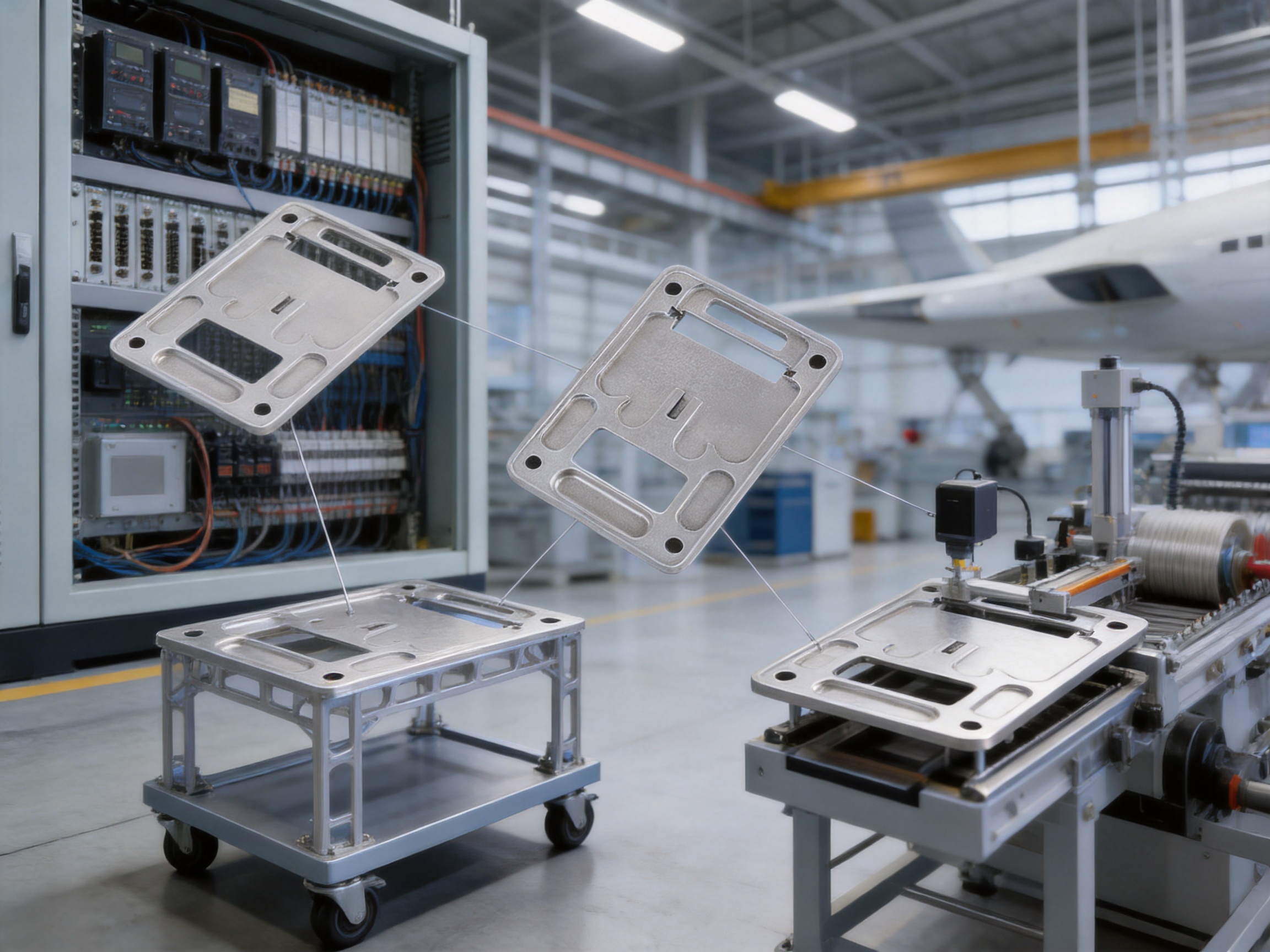
Application in Electronic Control Systems
Industrial control cabinets often contain controllers, power supplies, communication modules, sensors, terminal blocks, and other electronic equipment. These components generate heat and must be arranged in a stable, accessible, and well-supported layout.
The hollow mounting plate can function as a support backplate for electronic assemblies. Its stainless steel structure provides mechanical stability and can be selected for environments where condensation, dust, or cleaning exposure is present. The open central region may improve access behind the mounted equipment and provide space for cables, connectors, or ventilation pathways, depending on the system design.
A precision hole pattern helps installers position equipment consistently. This is valuable in control systems where cable routing, connector alignment, and clearance from neighboring components must be maintained. A well-designed backplate can also simplify maintenance by providing a stable reference surface for removing and reinstalling modules.
When thermal performance is important, the mounting plate may contribute to heat dissipation through contact with the cabinet structure or attached metal components. The exact thermal effect depends on the overall assembly, but the stainless steel plate can serve as a durable heat-transfer and support interface when included in the equipment design.
Application in Aerospace Ground Support Equipment
Aerospace ground support equipment must often balance strength, mobility, reliability, and weight. Components may be moved across hangars, ramps, maintenance areas, or storage locations. Even modest weight reductions can become valuable when equipment is manually handled or repeatedly repositioned.
The hollow mounting plate is suited to support frames, equipment interfaces, instrument assemblies, and fixed bases where the component must remain rigid without being unnecessarily heavy. Its stainless steel construction can provide durability for demanding service environments, while investment casting allows designers to integrate attachment points and structural transitions into one component.
Reliability is essential in aerospace-related support equipment because a failure in a support component can affect maintenance operations, alignment, or equipment availability. For this reason, material traceability, dimensional verification, surface inspection, and application-specific testing should be defined during the quotation and engineering stages.
The plate can also be adapted for specialized equipment configurations. Hole spacing, opening dimensions, outer contours, and mounting interfaces may be customized so that the casting integrates with a specific ground support platform.
Application in Textile Machinery
Textile machinery frequently operates at high speed and may produce continuous vibration. Components must maintain their position through repeated operating cycles, while supporting precise relationships between moving and stationary parts.
The hollow mounting plate can serve as a support component for drives, guides, sensors, tensioning systems, or other textile machine hardware. Its accurate mounting holes help establish repeatable assembly, while the rigid perimeter supports stable load transfer. The reduced central mass can be beneficial in equipment where moving or elevated components must be kept as light as practical.
Stainless steel also offers advantages in areas where fibers, oils, moisture, or frequent cleaning may be present. The smooth surface is easier to wipe and inspect, and the corrosion-resistant material can support longer service life than ordinary untreated steel in suitable conditions.
Quality Control and Production Reliability
Precision casting requires a disciplined quality system because defects can originate at many stages. The company’s manufacturing approach emphasizes source control, process management, inspection, and continuous improvement.
Raw Material Control
Core raw materials are purchased from internationally recognized suppliers in Japan and Australia. The company uses new materials in production and eliminates recycled materials. Controlled raw material sourcing supports stable alloy chemistry and helps reduce variation in casting performance.
Process Control
Process control includes pattern preparation, ceramic shell production, melting, pouring, cleaning, finishing, and inspection. Each stage affects the next. For example, a pattern defect may become a shell defect, while a shell problem may affect metal filling or surface condition.
Maintaining consistent process parameters supports repeatable quality between batches. Where customer requirements are specialized, process conditions and inspection criteria can be reviewed and adjusted accordingly.
Dimensional and Surface Verification
The mounting plate’s functional performance depends strongly on dimensional relationships. Inspection should verify the external profile, opening size, thickness, hole diameter, hole position, flatness, and critical reference surfaces. Surface evaluation should check for cracks, unacceptable pits, inclusions, residual ceramic, sharp edges, and excessive grinding.
Additional non-destructive or destructive tests may be considered when required by the application. The inspection method should be selected according to the material grade, casting geometry, load conditions, and customer standards.
Continuous Improvement
The company follows a continuous-improvement philosophy focused on customer needs and manufacturing support. Production feedback, inspection findings, and customer comments can be used to refine patterns, shell systems, pouring practices, machining plans, and inspection procedures.
Customization and Engineering Support
The hollow mounting plate is not limited to one fixed specification. Customization is an important advantage of working with a precision casting manufacturer that maintains its own technical and production capabilities.
Possible customization areas include:
1. Stainless steel grade or special steel formulation.
2. Outer length, width, and thickness.
3. Shape and size of the hollow center.
4. Number, diameter, and spacing of mounting holes.
5. Countersunk, counterbored, threaded, or machined hole requirements.
6. Reinforcing ribs, bosses, supports, and locating features.
7. Surface finish and edge treatment.
8. Machining allowances and dimensional tolerances.
9. Inspection documentation and testing requirements.
10. Packaging suitable for international shipment and industrial handling.
Customers can provide drawings, three-dimensional files, samples, performance requirements, or application descriptions. The manufacturer can then review the design for casting feasibility and recommend adjustments that improve filling, solidification, dimensional stability, and cost efficiency.
Technical support is especially important when a customer is moving from a fabricated assembly to a one-piece casting. The original design may contain unnecessary weld joints, excessive machining allowances, or geometry that can be optimized for investment casting. A joint engineering review can identify opportunities to reduce weight, simplify assembly, and improve repeatability.
Installation and Service Considerations
Before installation, the mounting plate should be checked against the applicable drawing or assembly specification. The mounting surface should be clean and free from burrs, chips, debris, or distortion that could affect seating. Fasteners should be selected according to the load, vibration, environment, and material compatibility of the complete assembly.
When the plate is used in a vibration-intensive application, the fastening method should be reviewed carefully. Locking devices, controlled tightening torque, suitable washers, or thread-locking methods may be required depending on the equipment design. The mounting plate itself should not be modified by unapproved drilling or grinding because such changes could affect load paths or hole alignment.
During service, routine inspection can include checking fastener tightness, surface condition, signs of corrosion, deformation, cracks, and contact with adjacent components. Stainless steel is corrosion resistant, but no material is immune to every environment. Chemical exposure, galvanic contact, high temperatures, and deposits can influence service performance.
Cleaning should use methods compatible with the selected stainless steel grade and the surrounding equipment. Abrasive contamination should be avoided where a smooth surface is required. If the component is used in a food, chemical, medical, or clean industrial environment, the customer should define applicable surface and hygiene requirements before production.
Supplier Manufacturing Strengths
Xinghua Shuangjie Casting Co., Ltd. was established in 2007 and specializes in the research and production of precision castings. Its factory is located in Zhangguo Industrial Park, Xinghua City, Jiangsu Province, and covers approximately 3,000 square meters. The company has 35 professional technical and production personnel.
The manufacturer has more than 20 years of experience in silica sol medium-temperature wax investment casting. Its product range includes carbon steel, alloy steel, stainless steel, and special steel castings for machinery, automotive, medical, instrumentation, valve, pipe fitting, pump, industrial hardware, marine, food machinery, chemical machinery, and oil and gas applications.
This industry coverage is valuable because it exposes the manufacturing team to different material requirements, functional designs, inspection expectations, and service environments. Experience across multiple sectors supports practical problem-solving when a customer presents a complex or customized mounting component.
The company’s strengths can be summarized as follows:
1. Specialized investment casting experience: Long-term focus on silica sol casting supports process familiarity and technical depth.
2. Material flexibility: The company produces stainless steel, carbon steel, alloy steel, and high-temperature or special steel castings.
3. Customized formulation support: Special material requirements can be reviewed according to application conditions.
4. Controlled raw materials: Core materials are sourced from recognized international suppliers, with new materials used in production.
5. Integrated technical support: Customers can receive assistance with design review, casting feasibility, material selection, production, and quality requirements.
6. Quality-centered production: A comprehensive quality-control system and continuous-improvement process support stable results.
7. Responsive customer service: The company emphasizes quick responses, customized services, and manufacturing support.
8. Broad application experience: Castings are supplied for industrial machinery, automotive, medical, instrumentation, marine, chemical, food machinery, and energy-related sectors.
Cost and Lifecycle Value
The purchase price of a casting is only one part of its total value. A mounting plate should also be evaluated according to machining time, assembly labor, material waste, installation effort, maintenance, replacement frequency, and service reliability.
The hollow investment-cast design may reduce cost by using material more efficiently and limiting secondary machining. If the casting replaces a multi-piece fabricated assembly, it may also reduce welding, inspection, alignment, and inventory requirements. A single integrated component can simplify procurement and assembly planning.
Weight reduction may create additional value. Lighter components are easier to transport and handle, and they may reduce the load on supporting structures. In moving equipment, lower mass can contribute to reduced drive requirements or lower dynamic loading, although the actual benefit must be confirmed through system-level engineering.
Durable stainless steel construction can also improve lifecycle value where corrosion or repeated cleaning would shorten the service life of untreated steel. The correct material grade, surface condition, and maintenance practice remain essential to achieving this benefit.
Design Recommendations for Customers
To obtain the best results from a custom hollow mounting plate, customers should provide as much application information as possible. Useful information includes the part drawing, three-dimensional model, annual quantity, prototype quantity, material preference, load direction, operating temperature, environmental exposure, fastener type, surface requirements, and inspection standards.
The design should identify which surfaces and holes are functionally critical. Not every surface requires the same tolerance or machining level. Distinguishing critical from non-critical features can help control cost while preserving assembly performance.
Designers should also avoid unnecessary sharp corners and abrupt changes in wall thickness. Proper radii and gradual transitions generally support better metal flow and reduce stress concentration. The hollow center should be sized and shaped according to actual clearance and weight objectives rather than simply made as large as possible.
Mounting holes should include appropriate edge distances and should not be placed so close to thin sections that they weaken the frame. If threads, counterbores, dowel holes, or precision seats are required, these should be clearly identified in the drawing so that the casting and machining allowances can be planned correctly.
Frequently Asked Questions
What is the Stainless Steel Industrial Hardware Castings Hollow Mounting Plate used for?
It is used as a rigid, lightweight support and mounting component in industrial control systems, aerospace ground support equipment, textile machinery, and other industrial assemblies requiring accurate positioning and durable stainless steel construction.
Why does the plate have a hollow center?
The hollow center removes material from lower-stress areas, reducing overall weight while retaining a strong outer frame and mounting regions. The opening may also provide clearance for cables, adjacent components, access, or ventilation, depending on the equipment design.
What manufacturing process is used?
The component is produced through silica sol investment casting using a medium-temperature wax process. The process creates a ceramic shell around a wax pattern, removes the wax, pours molten stainless steel into the shell, and then cleans, finishes, machines, and inspects the casting.
Can the mounting hole pattern be customized?
Yes. The number, diameter, spacing, and arrangement of mounting holes can be customized according to the customer’s equipment interface. Additional machining requirements such as threads, counterbores, countersinks, or precision locating holes can also be reviewed.
Can other stainless steel grades be supplied?
Material selection can be discussed according to strength, corrosion resistance, temperature, wear, and environmental requirements. The manufacturer also supports customized material formulation and special steel grades when required.
Is the entire casting fully machined?
Not necessarily. Investment casting produces the component close to its final shape. Critical interfaces and holes may be machined, while other surfaces may be used in their cast and finished condition. The final process depends on the drawing and performance requirements.
How does this product compare with a welded mounting plate?
A one-piece investment casting can integrate several features, reduce weld joints, minimize assembly operations, and provide smooth structural transitions. It may be more efficient when the design is complex or when a consistent, corrosion-resistant component is required.
Is the product suitable for high-vibration machinery?
It can be suitable for applications such as textile machinery when the material, geometry, fastening method, and inspection requirements are properly designed for the vibration conditions. The complete assembly should be evaluated for fatigue, resonance, fastener security, and load transfer.
What information should be provided for a quotation?
Customers should provide drawings or three-dimensional files, material requirements, quantity, dimensional tolerances, surface finish, application conditions, critical inspection points, and any testing or documentation requirements.
Can the product be supplied for low-volume customized projects?
Investment casting is often suitable for customized industrial components and low-to-medium production volumes because it can produce complex geometry without requiring extensive machining from solid material. Tooling and pattern requirements should be evaluated for each project.
What quality controls are available?
Quality control can include raw material management, process monitoring, visual inspection, dimensional inspection, surface evaluation, material verification, and additional testing according to customer requirements. The inspection plan should be established before production.
Conclusion
The Stainless Steel Industrial Hardware Castings Hollow Mounting Plate is a practical example of how precision investment casting can improve industrial component design. Its hollow center reduces unnecessary weight, while the stainless steel frame preserves strength, durability, corrosion resistance, and structural rigidity. Precisely positioned mounting holes support efficient installation and repeatable equipment alignment.
Compared with a basic flat plate, welded assembly, or solid machined block, the investment-cast design can integrate more features, reduce secondary processing, lower material waste, and provide greater freedom for customized equipment interfaces. Its applications in electronic control systems, aerospace ground support equipment, and textile machinery demonstrate its flexibility across different industrial environments.
The manufacturing strength behind the product comes from specialized silica sol investment casting experience, controlled raw materials, support for customized steel formulations, comprehensive quality management, and continuous technical improvement. With appropriate design review and application-specific inspection, the hollow mounting plate can provide a durable and efficient solution for industrial support and mounting requirements.
For customers seeking a lightweight but rigid stainless steel component with complex geometry and dependable installation features, this product offers a strong alternative to conventional fabrication and machining methods.
References
1. ASM International, ASM Handbook, Volume 15: Casting, general principles of investment casting and alloy castings.
2. ASTM International, Standard Practices and Specifications for Stainless Steel Castings and Investment Casting Processes.
3. American Foundry Society, Foundry Engineering and Casting Design Guidelines.
4. The Stainless Steel Development Association, Technical Guidance on Stainless Steel Selection, Fabrication, and Corrosion Resistance.
5. ISO, Quality Management Systems—Requirements, principles for controlled manufacturing and continuous improvement.
6. General engineering principles for structural lightweighting, load-path design, fastening, vibration resistance, and industrial equipment support.
Product: Stainless Steel Industrial Hardware Castings Hollow Mounting Plate
Related Products
-
-
Stainless Steel Pipe Fitting Castings Equal Tee for Water Systems is a precision-cast fitting design...
READ MORE -
Stainless Steel Pump Parts Castings for Centrifugal Pump are precision-engineered components designe...
READ MORE -
Stainless Steel Food Machinery Parts Castings Valve Housing is cast from high-grade stainless steel ...
READ MORE -
Stainless Steel Food Machinery Parts Castings Multi Port Fitting demonstrates the superior advantage...
READ MORE -
Stainless Steel Food Machinery Parts Castings Screw Auger utilizes investment casting technology to ...
READ MORE -
Stainless Steel Food Machinery Parts Castings Support Block is a fundamental structural component en...
READ MORE -
Stainless Steel Chemical Machinery Leveling Plate Castings are precision-engineered components desig...
READ MORE
Related News
-
Silica Sol Casting in Practical Terms Silica sol casting is a form of investment casting that uses ...
READ MORE -
Stainless Steel Valve Castings sit at the intersection of two demanding disciplines — metallurgy an...
READ MORE -
The Short Answer: Where Castings Beat Forgings For most industrial valve bodies with internal pass...
READ MORE -
Founded in 2007, Xinghua Shuangjie Foundry Co., Ltd. is a modern manufacturer specializing in the R...
READ MORE
Customized service
Customized service
Customized service
Customized service
Telephone consultation
The consultation form is here.
+86-18552688245Working hours 8:00~17:00
-
Address
Zhangguo Town Industrial Concentration Zone, Xinghua City
-
E-mail
tech-support@sjcastings.com
accounting@sjcastings.com
sales.manager@sjcastings.com
-
Friendship Link
sjcastings.com
-
Social Media Account
Copyright Xinghua Shuangjie Casting Co., Ltd. All Rights Reserved
